

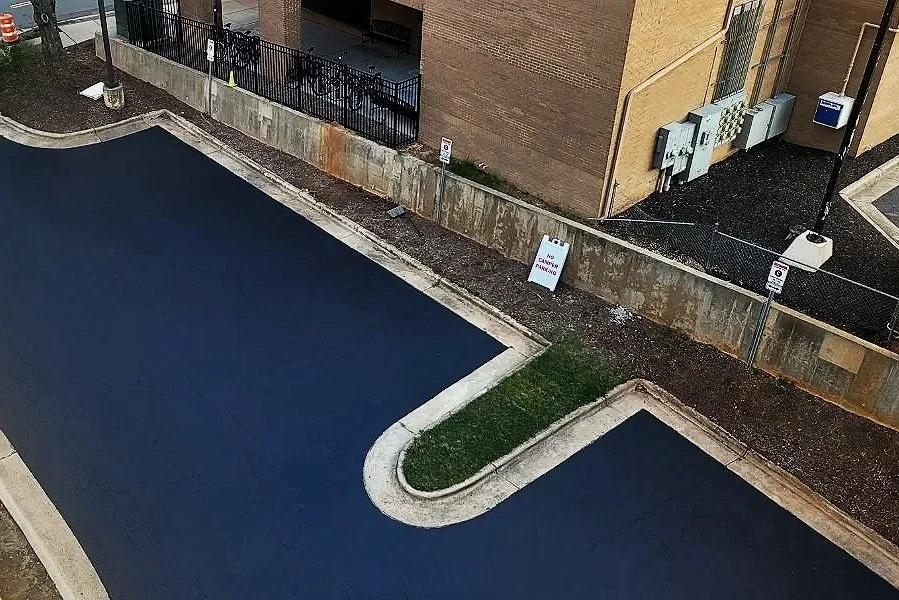
Pothole Repair
Pothole Repair in Raleigh, NC
Advanced Sealcoating repairs potholes on parking lots, private roads and driveways across the Raleigh area, and has since 2002. Potholes are the one pavement problem that does not wait for sealing season, so this is work we do year round, in Wake, Durham, Orange and Johnston counties.
We repair potholes permanently rather than filling them and hoping. This page covers how potholes form, why they get expensive fast, exactly how we fix them, and what to expect when you call.
How a pothole forms
A pothole starts as water. A crack or a worn patch of surface lets rain into the layers under the asphalt. That water softens the base, traffic flexes the weakened spot, and the surface breaks up from underneath. Freezing makes it worse: water expands as it freezes, opens the crack wider, then thaws and lets more water in.
Raleigh gets enough rain and enough freeze and thaw cycles each winter to run that sequence many times over. A crack that was cosmetic in September can be a wheel-swallowing hole by February.
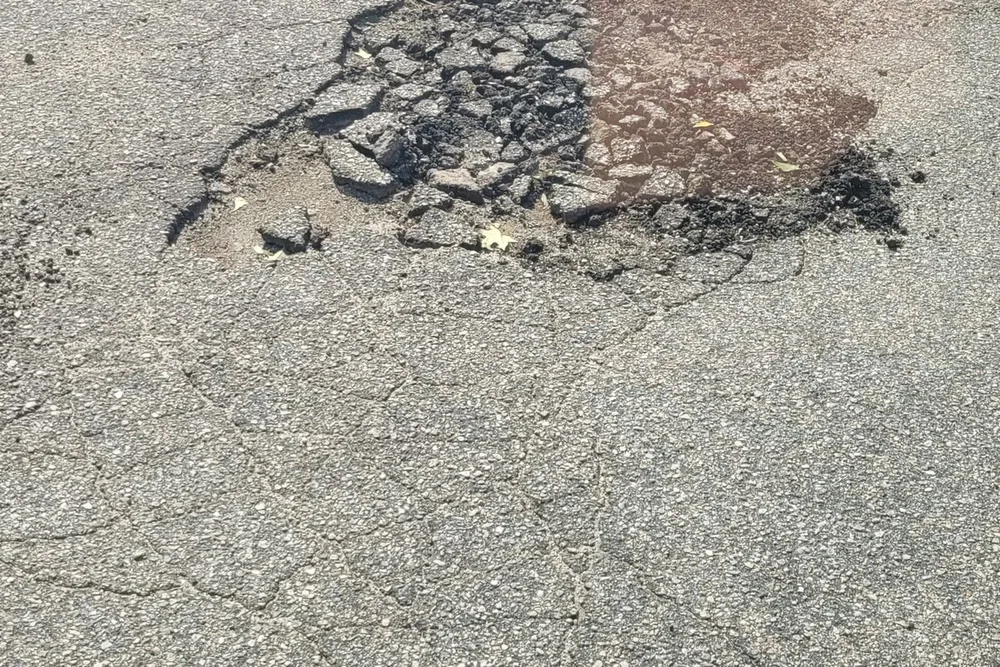
Why waiting costs more every month
Potholes do not hold their size. Every vehicle that hits the edge breaks off more asphalt, and every rain carries more water into the base. The repair you needed in October is a bigger repair in December and a section replacement by spring.
For a commercial property there is a second cost. A pothole is a documented trip and vehicle hazard. Damaged wheels, twisted ankles and the claims that follow them cost far more than the patch would have. Property managers who fix potholes on sight are not being fussy, they are managing liability.
- Vehicle damage claims from tenants and customers.
- Trip hazards, especially at night and for anyone using a walker, stroller or wheelchair.
- Water reaching the base and undermining pavement well beyond the visible hole.
- The impression a broken lot gives a prospective tenant or buyer before they reach the door.
How we repair a pothole
We restore the structure, not just the surface. A filled hole with no preparation fails the first wet week. Our process:
- Full debris removal. All loose asphalt and moisture come out of the hole. Patching over wet debris is why cheap repairs fail.
- Cut and square the edges where the hole calls for it. Straight, vertical edges give the new asphalt a clean surface to bond to.
- Hot or cold mix asphalt, chosen for the conditions and the season. Hot mix is typically available year round, though supply can vary. Cold mix is always available, so a hole that cannot wait never has to.
- Proper compaction so the repair carries load and sheds water instead of settling into a dip.
- Sealcoating integration when you want it, so the repair blends into the lot instead of standing out as a dark square.
The result is a repair that holds up under traffic and weather, and traffic can return to it immediately. One hole or twenty, we complete the work with minimal disruption to the property.
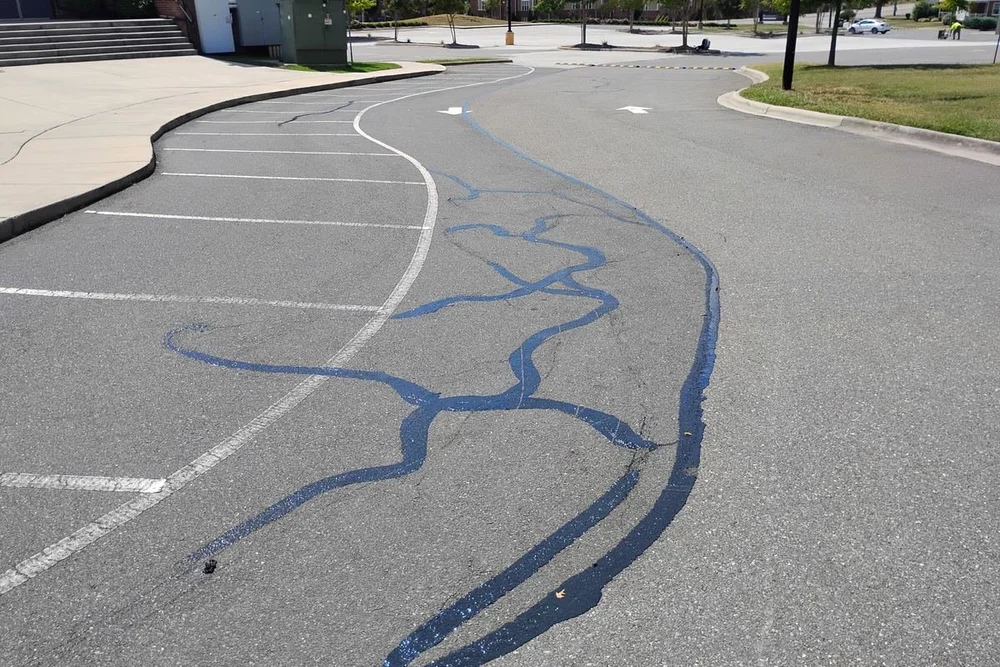
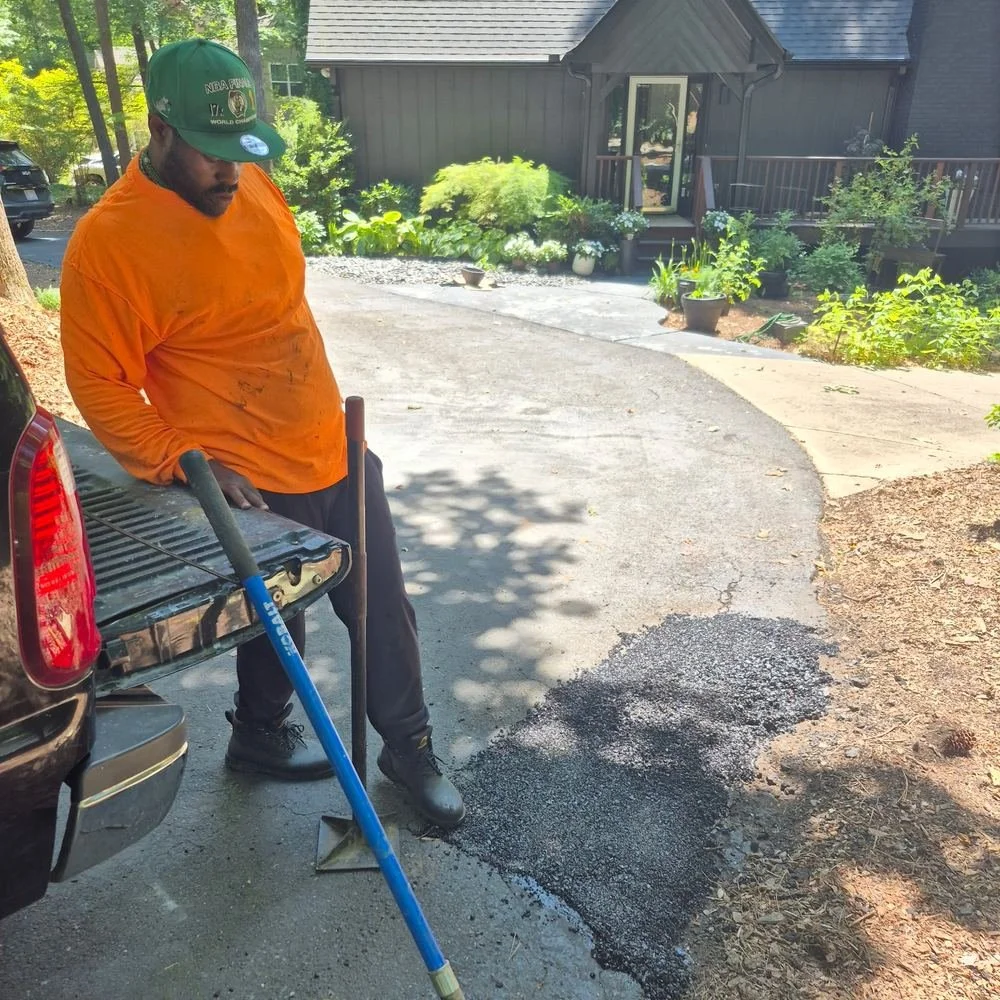
A small repair, start to finish
A broken pavement edge caught early, and the same spot during the repair. Caught at this size, the fix is quick and the cost is small.
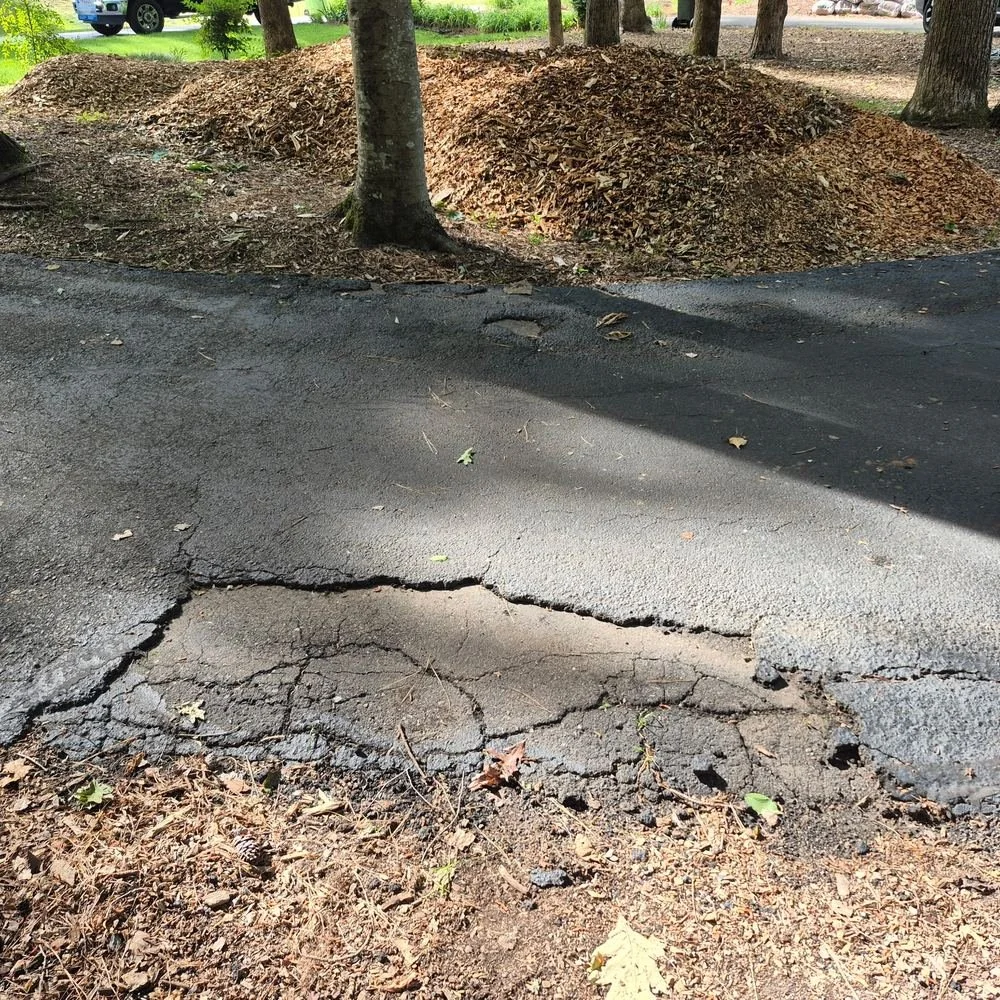
Hot mix, cold mix, and why the difference matters
| Hot mix asphalt | Cold mix asphalt | |
|---|---|---|
| What it is | Asphalt placed hot and compacted, the same material as the surrounding lot | A workable mix that can be placed at ambient temperature |
| Availability | Typically year round, though supply can vary | Always available |
| Best use | Permanent repairs when the material is available | Repairs when hot mix supply is limited, and holes that cannot wait |
| Back in service | Immediately | Immediately |
| What we tell you | Which one we are using and why, before the crew arrives | Same |
A temporary throw-and-go patch has its place: it makes a dangerous hole safe today. What it does not do is last, and it is not what we sell as a repair. When a hole needs a temporary fix first and a permanent one later, we say so.
Potholes are year-round work
Sealcoating needs warm, dry weather. Potholes do not care. The worst ones show up in late winter, exactly when the rest of the pavement industry is quiet, and that is when a property manager most needs someone who answers the phone. We schedule pothole and crack repair through the cold months and pair it with the striping and warehouse marking work that also runs year round.
We do all we can to work to your schedule, including same-day and next-day service when a crew is available. We place asphalt whenever surface and air temperatures are above 35 degrees.
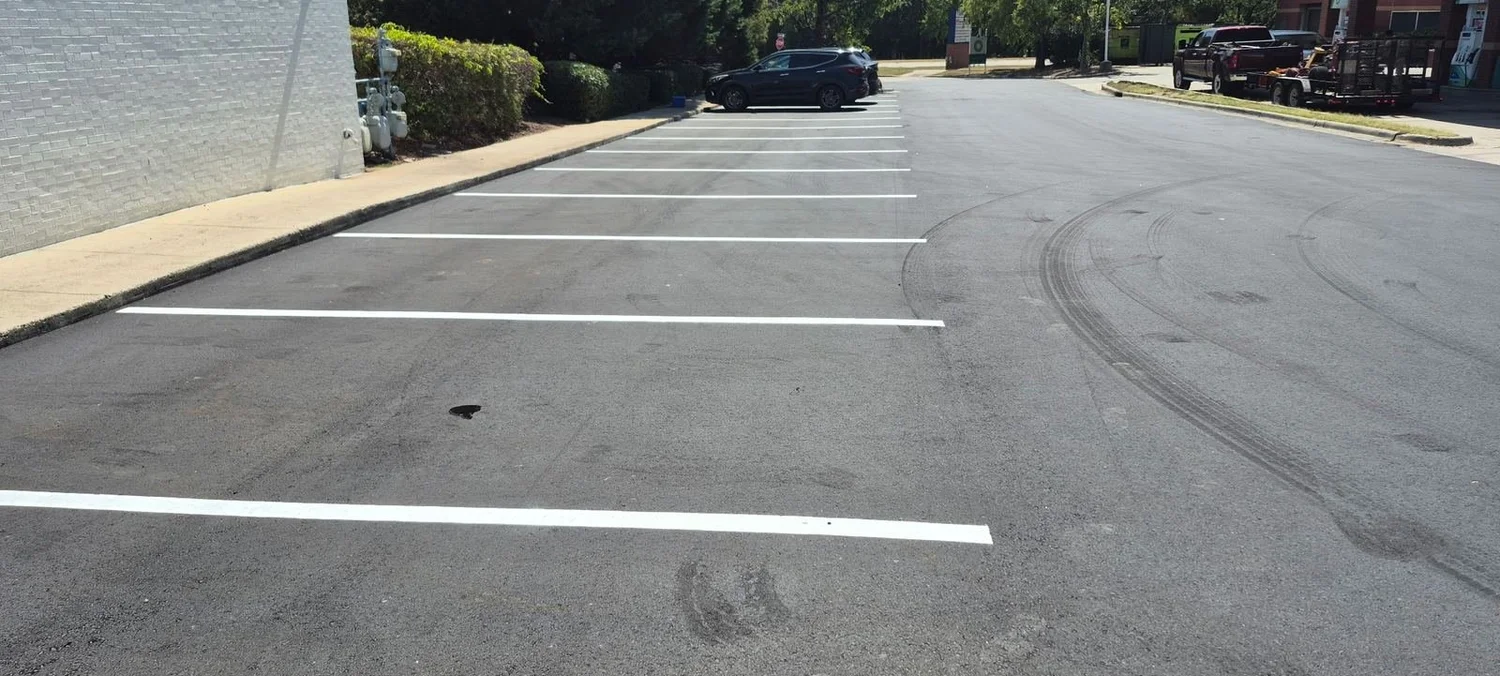
Crack sealing: the repair that prevents the next pothole
Most potholes begin as an unsealed crack. Our hot rubberized crack sealing fills the crack with a flexible, waterproof material that moves with the pavement through heat and cold, keeps water out of the base, and stops the sequence that ends in a hole. If your lot has spreading cracks and a pothole or two, we will usually recommend sealing the cracks in the same visit. It is the cheapest square footage of pavement work there is.
Signs a pothole is on the way
Most potholes announce themselves weeks ahead. If you see any of these on a walk of the lot, the repair is still small:
- A patch of connected cracks in a rough grid, sometimes called alligator cracking. The surface has already separated from the base underneath.
- A low spot that holds water after rain. Standing water is water working its way down.
- Loose stone at the surface, or an area that sounds hollow underfoot.
- A crack that has widened since the last time you looked at it.
- Any place where tires have started to pull chunks loose.
Sealing the cracks and patching the soft spot at this stage costs a fraction of the pothole repair that follows, and a small fraction of the base repair that follows that. If you are not sure what you are looking at, send us a photo and we will tell you.
Where we work
Raleigh, Durham, Chapel Hill, Wake Forest, Cary, Clayton, Smithfield and the surrounding communities across Wake, Durham, Orange and Johnston counties. We are based at 6012 Caledonia St in Raleigh, so most of the Triangle is within an easy drive for a single-hole repair as well as a full lot.
Get a free pavement assessment
We will look at the hole, and at what caused it, and tell you honestly whether it needs a patch, a repair, or a section replacement. Written estimate, no charge.
Request your free assessment or call 919-971-0698.
Frequently asked questions
How fast can you repair a pothole?
We do all we can to work to your schedule, including same-day and next-day service when a crew is available.
How long before we can drive on the repair?
Immediately. Traffic can return as soon as the repair is complete, on hot mix and on cold mix.
Do you repair potholes in winter?
Yes. Potholes are year-round work for us, and winter is when the worst ones appear. We place asphalt whenever surface and air temperatures are above 35 degrees.
Is there a minimum charge?
Yes, $200 per visit. We take single-pothole jobs and multi-lot programs alike.
Will the repair match the rest of the lot?
A fresh repair is darker than weathered asphalt. If you want the lot to read as one surface, we can sealcoat the repair area or the whole lot in the same visit.
What is the difference between a patch and a repair?
A patch fills the hole. A repair removes the failed material, squares the edges, places new asphalt and compacts it so it carries load. We sell repairs, and we tell you when a temporary patch is the right stopgap.
Do you also seal cracks?
Yes. Hot rubberized crack sealing is usually the first thing we recommend on a lot with potholes, because unsealed cracks are where the next pothole starts.
Do you guarantee the work?
Yes. Pothole repairs carry a 30-day workmanship guarantee.
Are you licensed and insured?
Yes. Certificates are available on request for property managers and general contractors who need them on file.
Do you work on driveways, or only commercial lots?
Both. Most of our pothole work is commercial, and we take residential driveway repairs throughout the service area.