

SealCoating
Seal Coating in Raleigh, NC
Advanced Sealcoating has protected asphalt across the Raleigh area since 2002. We seal coat parking lots, commercial properties and driveways in Wake, Durham, Orange and Johnston counties, and we handle the striping that goes back down after the sealer cures.
Asphalt fails from the top down. Sealcoating is the maintenance step that slows that failure, and it costs a fraction of what replacement costs. This page covers what the work involves, when your pavement is due for it, and how we do it.
What seal coating actually does
Asphalt is bound together by a petroleum binder. Sunlight oxidizes that binder, water works into the surface, and vehicle fluids dissolve it. As the binder breaks down, the pavement loses flexibility, turns grey, and starts to ravel. Loose aggregate comes up. Water gets into the base layer. Once water reaches the base, you are no longer looking at a surface problem.
A seal coat is a liquid barrier applied over the existing asphalt. It blocks water, shields the surface from UV, and resists the gas and oil that would otherwise eat into the binder. It also restores the black finish, which is the part building owners notice first and tenants comment on.
Why Raleigh pavement needs it
Central North Carolina is hard on asphalt in a specific way. Summers are hot and the sun sits on the pavement for months, which drives oxidation. Rainfall is heavy and frequent, so any surface opening becomes a water entry point quickly. Winters bring enough freeze and thaw cycles to widen the cracks that water already opened.
The result is that untreated lots in the Triangle age faster than owners expect. A lot that looks acceptable in year three can be raveling in year five, and by then the cheap fix window has closed.
What sealcoating does not do is fix structural failure. If the base has already failed and the pavement is moving under load, sealer laid over the top will crack along with everything underneath it. We will tell you when that is what we are looking at.
Signs your lot is due
- The surface has faded from black to grey or light brown.
- You can see loose stone, or the surface feels rough and sandy underfoot.
- Hairline cracks are spreading, especially in a connected pattern.
- Water stands in spots after rain instead of draining.
- Oil stains have soaked in and softened the surface.
- Your painted lines and ADA markings have worn faint.
Faded striping is worth naming on its own. Worn markings are a liability question, not a cosmetic one, and accessibility markings in particular have to stay legible.
How we do the work
- Assessment. We walk the property, measure it, and identify what needs repair before any sealer goes down. You get a written estimate. No charge.
- Cleaning. The surface is blown clean and scrubbed where needed. Oil spots get treated with a primer, because sealer will not bond to contaminated asphalt.
- Repairs first. Potholes get filled and cracks get sealed. Sealing over an open crack wastes the sealer and hides the problem.
- Application. We apply our sealer blend, which combines the base sealer with additives and sand for grip and durability.
- Cure. The lot stays closed while the sealer sets. A minimum of 4 hours.
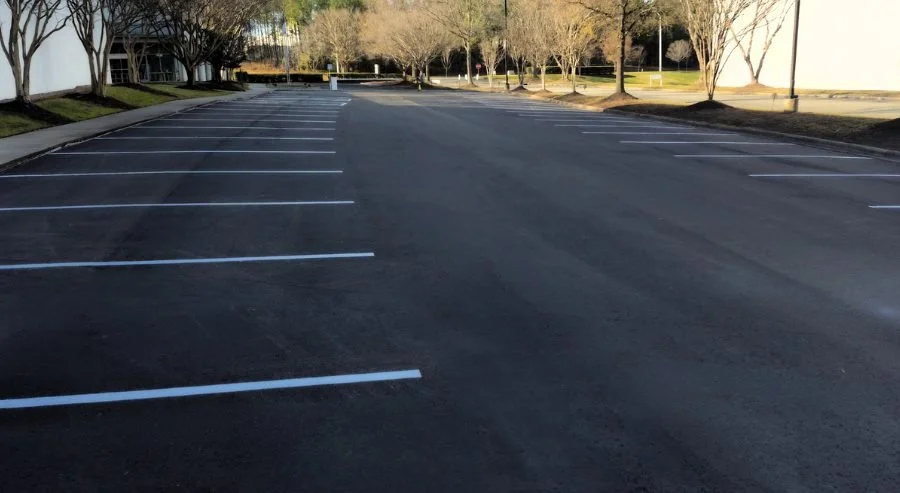
- Striping. Lines, stalls, ADA spaces, fire lanes and directional markings go back down over the fresh surface.
Before and after
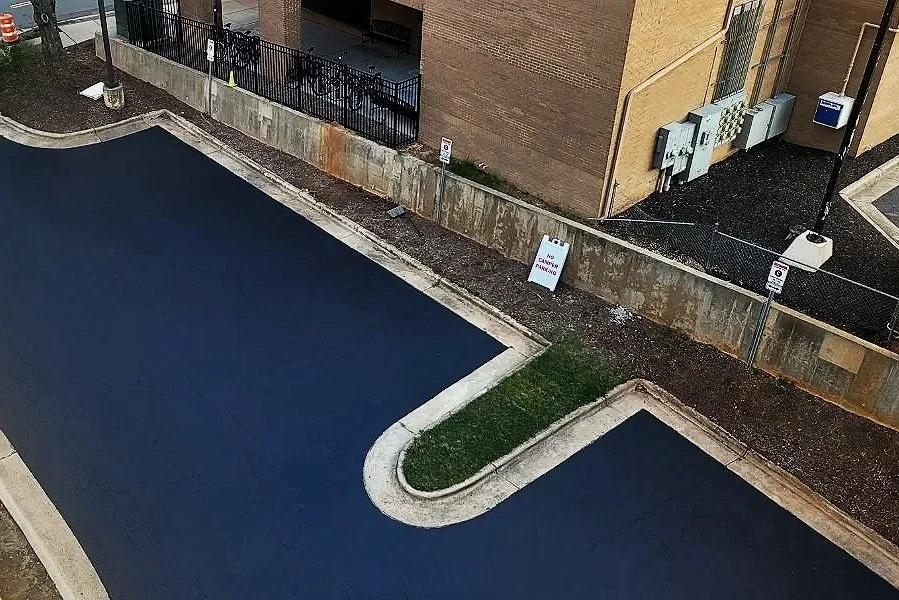
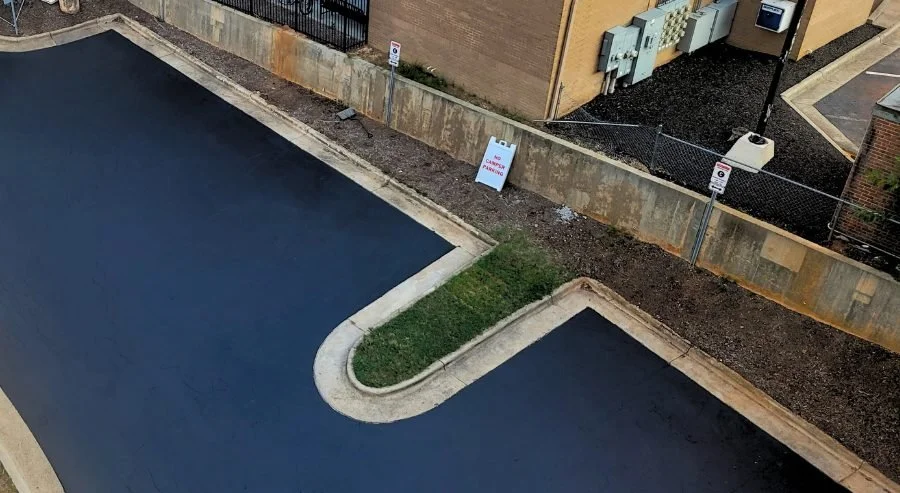
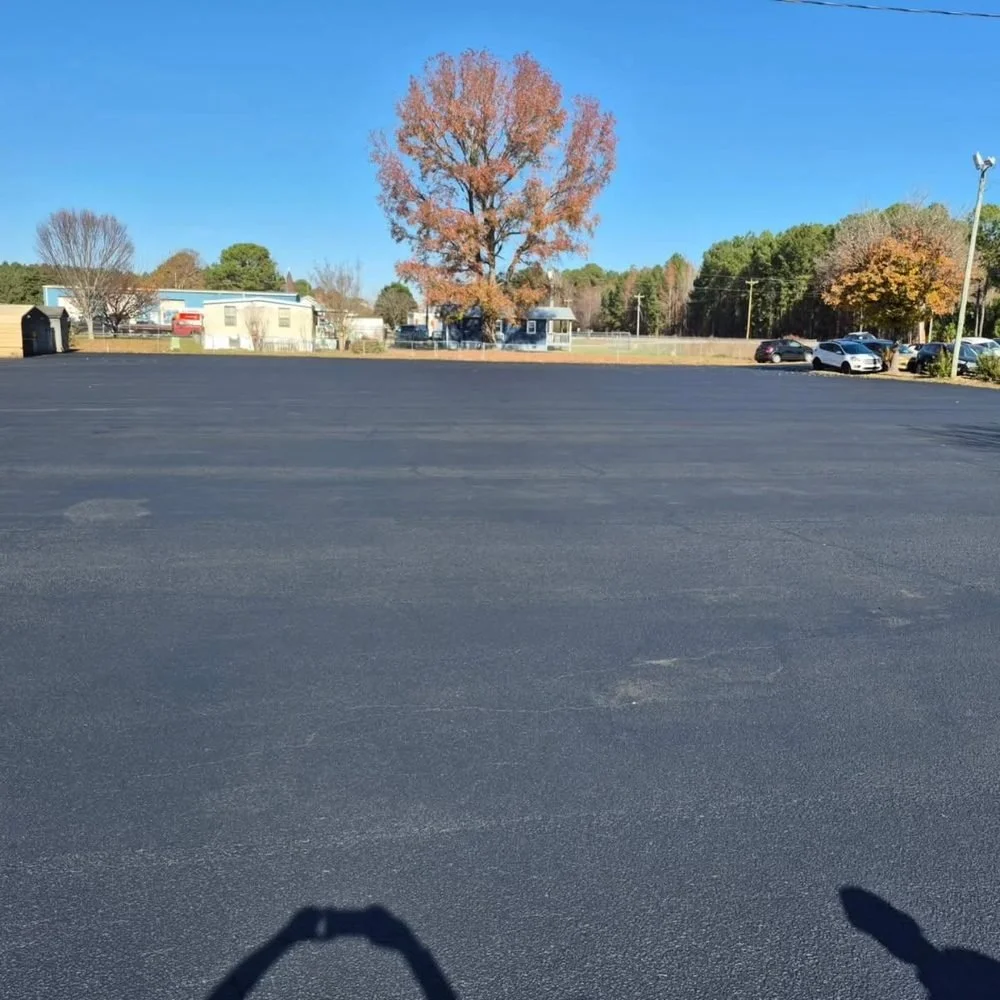
The same lot, photographed before and after. On the left, a surface that has oxidized grey with cracking spreading across the joints. On the right, the same pavement sealed and protected.
Commercial parking lots
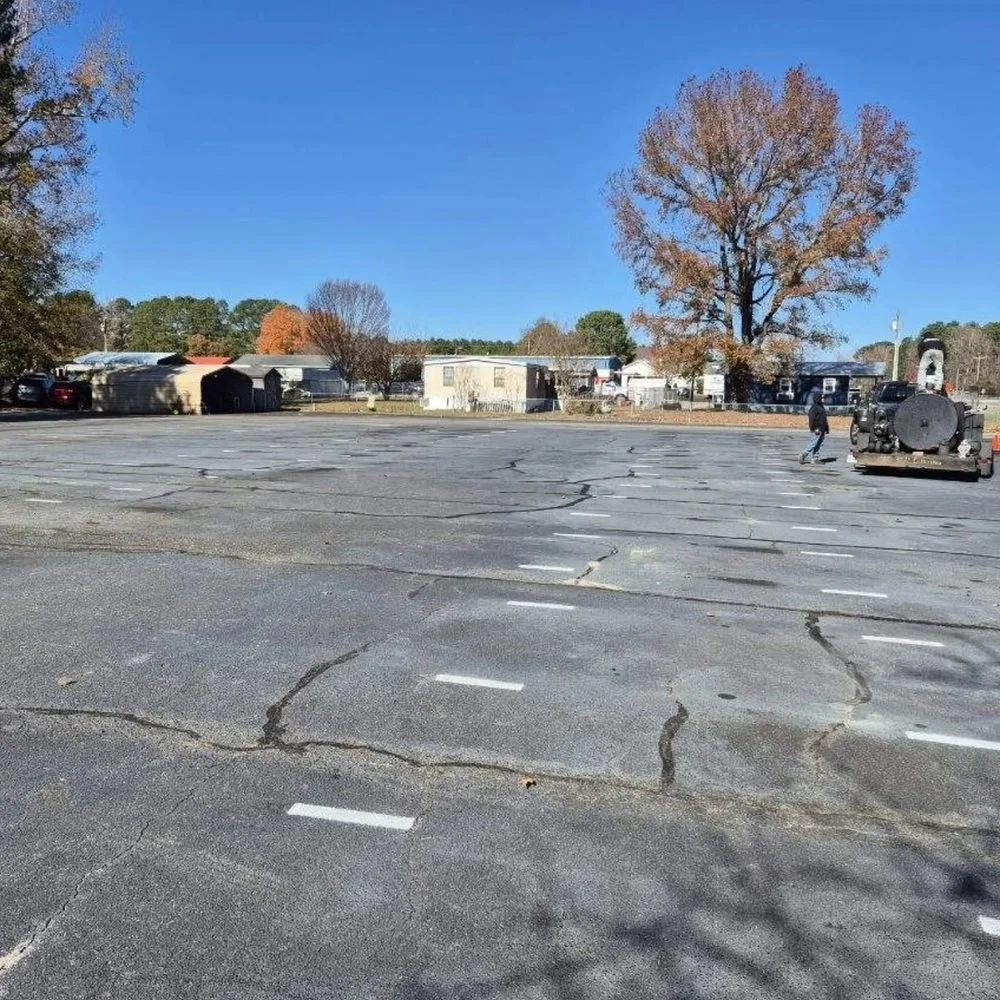
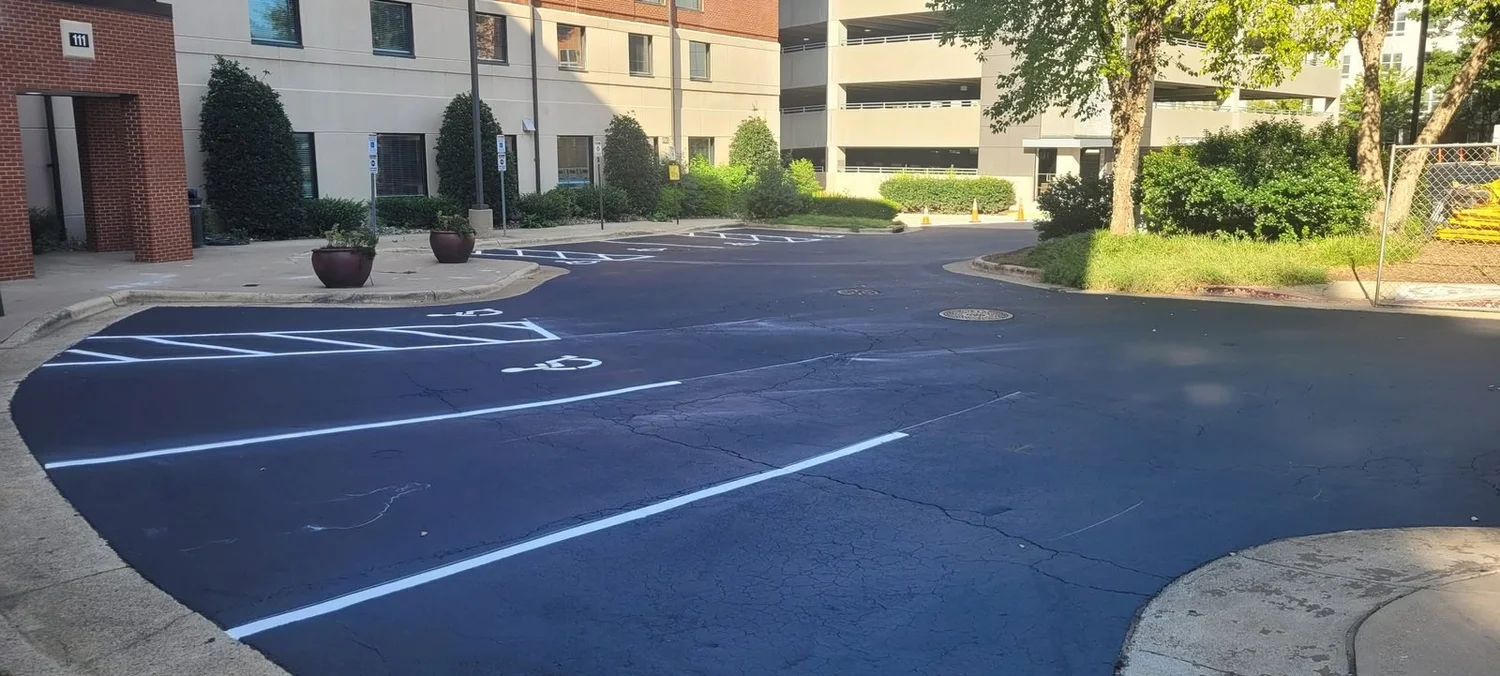
Most of our work is commercial. Retail centers, office parks, warehouses, apartment communities and HOA properties. For a property manager the pavement is both a maintenance budget line and the first thing a prospective tenant sees, so the schedule matters as much as the work.
We plan commercial jobs around your operating hours and coordinate access so the property keeps functioning while we work.
One crew for the whole property
Sealcoating is rarely the only pavement item on a property manager's list. We also handle line striping, warehouse floor marking, sport court surfaces and pothole repair, which means the sealing, the repairs and the markings are scheduled together and coordinated by one crew. That removes the sequencing problem of booking separate vendors and hoping the second one shows up after the first one has cured.
Driveways and residential work
We seal residential driveways as well. The process is the same on a smaller footprint: clean, repair what needs repairing, apply the sealer, let it cure. If you are comparing a professional application against a bucket from a home center, the difference is surface preparation and the sealer itself. A driveway that was not cleaned properly will shed its coating within a season.
What waiting costs you
Deferred pavement maintenance does not hold steady, it compounds. A surface crack is cheap to seal. That same crack, left open through a rainy season, carries water into the base. Saturated base loses load-bearing capacity, the pavement flexes under vehicle weight, and the single crack becomes a network. The network becomes a pothole. The pothole becomes a section that has to be cut out and replaced.
Each step in that sequence costs more than the one before it, and none of the steps are reversible by sealing. That is the entire argument for putting sealcoating on a schedule rather than reacting to complaints: you are buying back the years where the fix is still inexpensive.
For a commercial property there is a second cost that does not appear on a maintenance invoice. A lot with faded lines, standing water and visible potholes shapes what a tenant, customer or prospective buyer assumes about how the rest of the building is maintained. That impression is formed in the parking lot, before anyone reaches the door.
Seal coating versus repaving
| Seal coating | Repaving | |
|---|---|---|
| What it addresses | Surface wear, oxidation, water entry | Structural failure, base problems |
| Downtime | Short, measured in days | Extended, often a week or more |
| Relative cost | A small fraction of replacement | Full replacement cost |
| When it is the right call | Pavement is sound but weathering | Pavement is cracked through and moving |
The economic argument for maintenance is simply that it is cheaper to keep water out of the base than to rebuild the base. Once you are repaving, the decision was made years earlier by neglect.
Where we work
Raleigh, Durham, Chapel Hill, Wake Forest, Cary, Clayton, Smithfield and the surrounding communities across Wake, Durham, Orange and Johnston counties. We are based at 6012 Caledonia St in Raleigh.
Frequently asked questions
How often should a parking lot be seal coated?
Traffic volume, sun exposure and drainage all affect the answer, so we base the recommendation on the condition of your specific pavement rather than a fixed calendar. On average, however, you can expect an application every 3 to 5 years.
How long before we can drive on it?
Cure time depends on temperature and humidity, and we give you the schedule in writing before the crew arrives so you can plan access. Cure time can be as quick as 4 hours with ideal conditions, and up to 72 hours with sub-standard conditions like low temps, cloudy days, or shaded areas.
What time of year can sealcoating be done?
Sealer needs warm, dry conditions to cure correctly, which in this area means the work happens across the warmer months and not during a rain window. For optimal results, apply when temperatures are at least 50°F and rising.
What does it cost?
Pricing depends on square footage, the condition of the surface, and how much crack and pothole repair is needed first. We measure the property and give you a written estimate at no charge, so you get a real number rather than a range.
Do you repair cracks and potholes too?
Yes. Repairs happen before sealing, because sealer applied over an open crack does not hold. Pothole repair is a standalone service as well if that is all you need.
Do you restripe after sealing?
Yes. Line striping is part of what we do, including stalls, ADA accessible spaces, fire lanes, directional arrows and curb marking. Fresh sealer with worn lines is a half-finished job.
Do you work on driveways, or only commercial properties?
Both. Most of our volume is commercial parking lots, and we take residential driveway work throughout the service area.
Are you licensed and insured?
Yes. Certificates are available on request, which property managers and general contractors typically need for their files before work begins.
How long have you been in business?
Advanced Sealcoating has been serving the Raleigh area since 2002.
Can you work around our business hours?
Commercial jobs are scheduled around your operations.
Get a free pavement assessment
We will measure your property, tell you honestly whether sealcoating is the right step, and put the number in writing. No charge and no obligation.
Request your free assessment or call 919-971-0698.